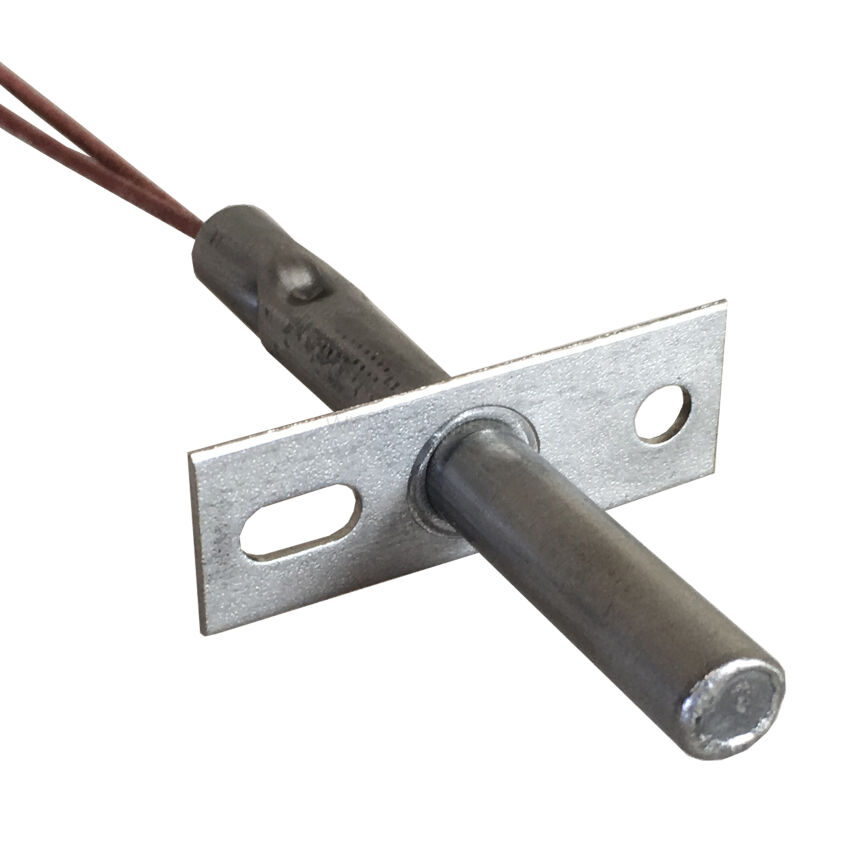
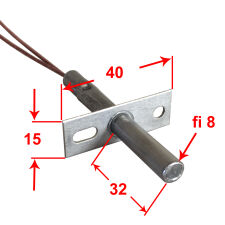
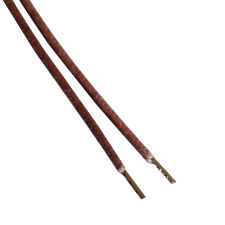
Exhaust gas sensor for GECO G-PT1000-05 controller regulator
-
Watch the product:
- Add feedback:
- Code: 5029
- Manufacturer: GECO
- Manufacturer's code: 2001230050290
- Weight: 0.20 kg
- Availability: None
-
- Net Price: €16.34 €20.10
- szt.
-
 Payment in cash, Payment via bank transfer, Online Payments Payment Cards, ApplePay, Google Pay - P24, PayPro SA, Osobista płatność przy odbiorze, Płatność odroczona (tylko dla zweryfikowanych Klientów), eService (card or bank transfer), Zapłacę przy odbiorze listonoszowi, Payment by bank transfer - wait for the proforma invoice to be sent, Zapłacę przy odbiorze kurierowi Inpost
-
 Fast Blik payments.
The product is shipped within 24 hours.
We complete the order within 24 hours.
You can return the product within 14 days.
ORIGINAL GECO EXHAUST GAS SENSOR FOR PT-1000 CONTROLLERS
Special features:
- for Geco controllers and more
- measures exhaust gas temperature in the chimney
- official representative
- ready to connect
- high quality workmanship
ORIGINAL GECO EXHAUST GAS SENSOR
SENSOR CONSTRUCTION:
- measuring head
- connection cable length 20cm
- insulation made of fiberglass braid and metal
- flange with mounting hole
APPLICATION:
The PT1000 sensor can be used for GECO controllers and others that support PT1000 sensors
e.g.
- IRYD 610, IRYD RTZ, IRYD RTZ PID, IRYD RTZ PID
- IRYD MZ PID
- KRYPTON 340/350
- Measurement range: -25 degrees C to 480 degrees C
- Measurement accuracy: +/- 0.3 degrees
PRINCIPLE OF OPERATION
After connecting the exhaust gas sensor to the controller, it analyzes changes in exhaust gas temperature, limiting chimney losses, increasing boiler efficiency, and reducing fuel consumption.
The exhaust gas sensor is usually installed in the flue pipe by drilling an appropriately sized hole. The sensor should be inserted into the hole and secured with a screw. The hole is best sealed against exhaust gas leakage using silicone or fireproof adhesive. The sensor's task is to measure the temperature of exhaust gases exiting the chimney. Based on these parameters, the controller can properly manage the blower operation to minimize energy and heat losses that unnecessarily "go up the chimney." The optimal exhaust gas temperature ranges from 160 to 200 degrees Celsius.
 Polish
 Czech
Czech
 German
 Slovak
 Ukrainian