 Zapraszamy do sklepu http://www.example.com |
Pełna nazwa firmy ullica nr kod Miasto tel. +48 00 0000-000 |
Cast iron grate ring for 15 kW fireplace - cast iron for screw feeder
Produkty > Podajniki opału do kotłów > Retort feeders, spare parts, snails
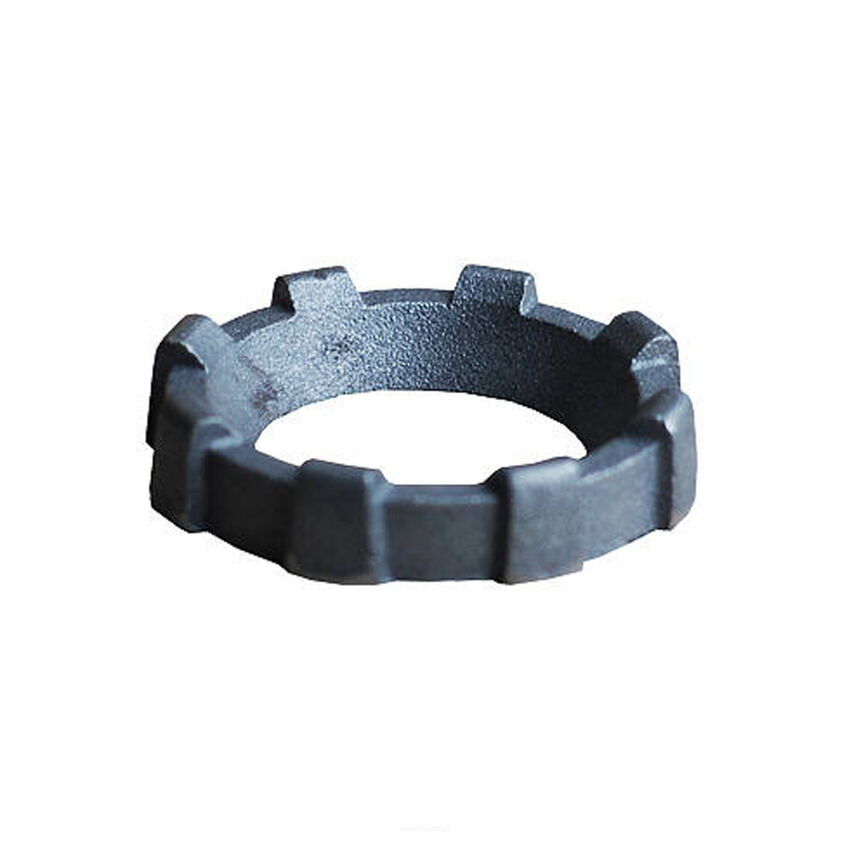
Code: 7023
Producer: PANCERPOL
Producer code: 2001230070236

Weight: 2.50kg
Price gros: €16.96
Price net: €13.79
Producer: PANCERPOL
Producer code: 2001230070236
Weight: 2.50kg
Price gros: €16.96
Price net: €13.79
PRODUCT DESCRIPTION
The toothed grate ring of the Pancerpol feeder furnace is made of heat-resistant cast iron, which makes it resistant to deformation and thermal shocks occurring during boiler combustion. It is used in feeders for stoves with a power of 15 kW.
WHAT IS THE FURNACE RING MADE OF?
Cast iron – a casting alloy of iron with carbon, silicon, manganese, phosphorus, sulfur, and other components, containing from 2.11 to 4.3% carbon in the form of cementite or graphite. The presence of a specific carbon phase depends on the cooling rate and the chemical composition of the alloy. Slow cooling favors the precipitation of graphite. Alloying additives also play a certain role here. According to the applicable standard, cast iron is defined as a material whose main component is iron and in which the carbon content exceeds 2% (the presence of large amounts of carbide-forming elements may change the stated carbon content).
Cast iron is characterized by low casting shrinkage, ease of mold filling, low melting temperature, and low production cost, and after solidification it features high machinability, which makes cast iron one of the most commonly used casting materials in machine construction.
FEEDER OPERATION PRINCIPLE
The Automatic Fuel Feeding Unit, which includes a fuel tank, a fan, and a microprocessor controller, creates a system for storing, automatically feeding fuel to the burner, and leads to the most economical combustion process in a continuous system. Fuel transport from the tank to the retort burner is carried out by a screw feeder. The fuel is pushed onto the grate of the furnace through a crucible placed in the center of the grate. The fuel moved by the screw located in the feeder tube is evenly spread in the crucible, then on the afterburning grate, forming a fuel pile divided into combustion zones. The air needed for the combustion process is supplied by a forced draft fan. The screw rotation speed can be changed by the microprocessor controller depending on changes in the boiler's heat output. The screw speed requires an appropriate amount of air. The fuel, which slowly moves out of the crucible, goes through all combustion phases, i.e., drying and heating of the fuel, release of volatile parts, coke burning, oxygen reduction, and coal burnout from the slag.
DIMENSIONS
Diameter - 120 mm
Height - 28 mm
Diameter of the central hole - 70 mm
PRODUCT DESCRIPTION
The toothed grate ring of the Pancerpol feeder furnace is made of refractory cast iron, which makes it resistant to deformation and thermal shocks occurring during boiler combustion. It is used in feeders for stoves with a power of 15 kW.
WHAT IS THE FURNACE RING MADE OF?
Cast iron – a foundry alloy of iron with carbon, silicon, manganese, phosphorus, sulfur, and other components, containing from 2.11 to 4.3% carbon in the form of cementite or graphite. The occurrence of a specific carbon phase depends on the cooling rate and the chemical composition of the alloy. Slow cooling favors the precipitation of graphite. Alloying additives also play a certain role here. According to the applicable standard, cast iron is defined as a material whose main component is iron and in which the carbon content exceeds 2% (the presence of large amounts of carbide-forming elements may change the stated carbon content).
Cast iron is characterized by low casting shrinkage, ease of mold filling, low melting temperature, and low production cost, and after solidification it features high machinability, which makes cast iron one of the most commonly used foundry materials in machine construction.
FEEDER OPERATION PRINCIPLE
The Automatic Fuel Feeding Unit, which includes a fuel tank, a fan, and a microprocessor controller, creates a system for storing, automatically feeding fuel to the burner, and leads to the most economical combustion process in a continuous system. Fuel transport from the tank to the retort burner is carried out by a screw feeder. The fuel is pushed onto the grate of the furnace through a crucible placed in the center of the grate. The fuel moved by the screw located in the feeder tube is evenly spread in the crucible, then on the afterburner grate, forming a fuel pile divided into combustion zones. The air needed for the combustion process is supplied by a blower fan. The screw rotation speed can be changed by the microprocessor controller depending on changes in the boiler's heat output. The screw speed requires an appropriate amount of air. The fuel, which slowly moves out of the crucible, goes through all combustion phases, i.e., drying and heating of the fuel, release of volatile parts, coke burning, oxygen reduction, and coal burnout from the slag.
DIMENSIONS
Diameter - 120 mm
Height - 28 mm
Diameter of the central hole - 70 mm
Product options
 Polish
 Czech
Czech
 German
 Slovak
 Ukrainian