 Zapraszamy do sklepu http://www.example.com |
Pełna nazwa firmy ullica nr kod Miasto tel. +48 00 0000-000 |
Pressure gauge M 100 - 0.6 MPA
Produkty > Instalacja CO > Installation of central heating, measuring armature
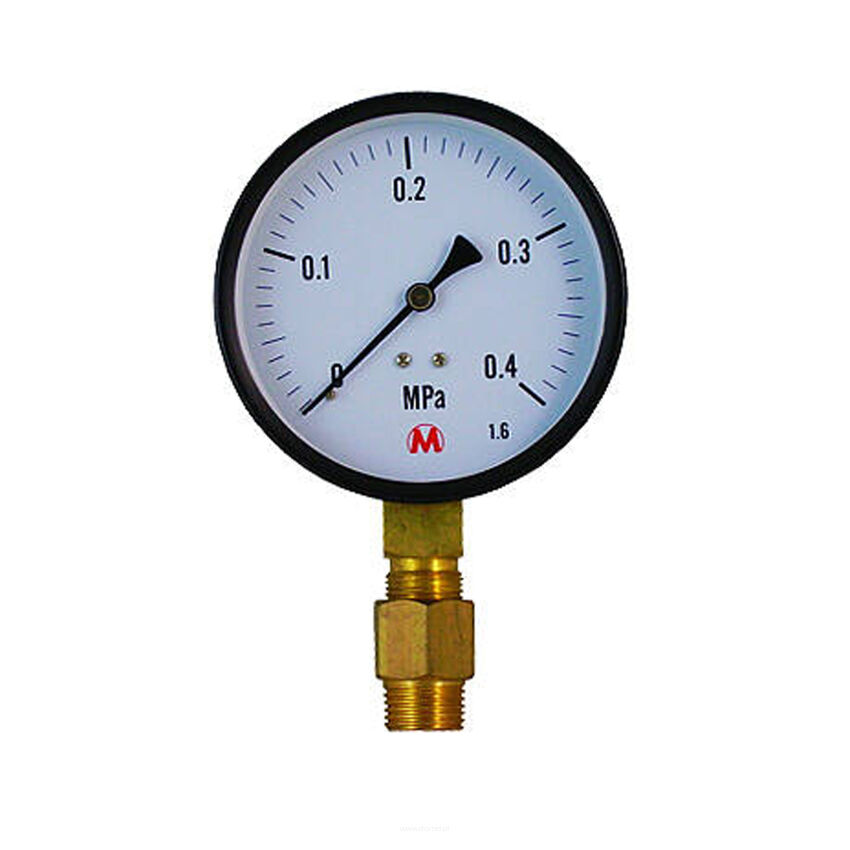
Producer: INTROL
Producer code: 2001230051891

Weight: 0.10kg
Price gros: €7.33
Price net: €5.96
Axial pressure gauge
In pressure gauges for measuring differential pressure, the difference between two pressure values is determined directly and indicated on the pressure gauge dial.
Operating principle - two closed chambers with medium are separated from each other. If both operating pressures have the same value, the measuring element cannot move, so there is no pressure indication. The differential pressure value is indicated only when one of the pressures is higher or lower. At high static pressures, direct measurement of low differential pressures is possible. The use of diaphragm elements results in very high overload resistance.
The permissible static pressure value and overload resistance on the (+) and (-) sides must be observed. The transmission of the measuring element movement and the pressure indication are carried out identically as in the pressure gauges for measuring overpressure described earlier.
Application range:
- filter systems (monitoring filter condition),
- level measurement (in closed containers),
- flow measurement (pressure drop).
There is also a simple version of the differential pressure gauge - the gauge has two Bourdon tubes and two pointers on one dial - the pressure difference resulting from the difference in readings must be calculated manually.
Differential pressure gauge ranges: difference (0....16 mbar) to (0....25 bar) - respectively (0....1.6 kPa) to (0....2.5 MPa) - with accuracy class from 0.6 to 2.5%
Maximum pressure 0.6 MPa
In pressure gauges for measuring differential pressure, the difference between two pressure values is determined directly and indicated on the pressure gauge scale.
Operating principle - two closed chambers with medium are separated from each other. If both operating pressures have the same value, the measuring element cannot move, therefore there is no pressure indication. The differential pressure value is indicated only when one of the pressures is higher or lower. At high static pressures, direct measurement of low differential pressures is possible. The use of diaphragm elements results in very high overload resistance.
The permissible static pressure value and overload resistance on the (+) and (-) sides must be observed. The transmission of the measuring element movement and the pressure indication are carried out identically as in the pressure gauges for measuring overpressure described earlier.
Application range:
- filter systems (monitoring filter condition),
- level measurement (in closed containers),
- flow measurement (pressure drop).
There is also a simple version of the differential manometer - the manometer has two Bourdon tubes and two pointers on one scale - the pressure difference resulting from the difference in readings must be calculated manually.
Pressure ranges of differential manometers: difference (0....16 mbar) to (0....25 bar) - respectively (0....1.6 kPa) to (0....2.5 MPa) - with an accuracy class from 0.6 to 2.5%
Maximum pressure 0.6 MPa
Product options
 Polish
 Czech
Czech
 German
 Slovak
 Ukrainian