 Zapraszamy do sklepu http://www.example.com |
Pełna nazwa firmy ullica nr kod Miasto tel. +48 00 0000-000 |
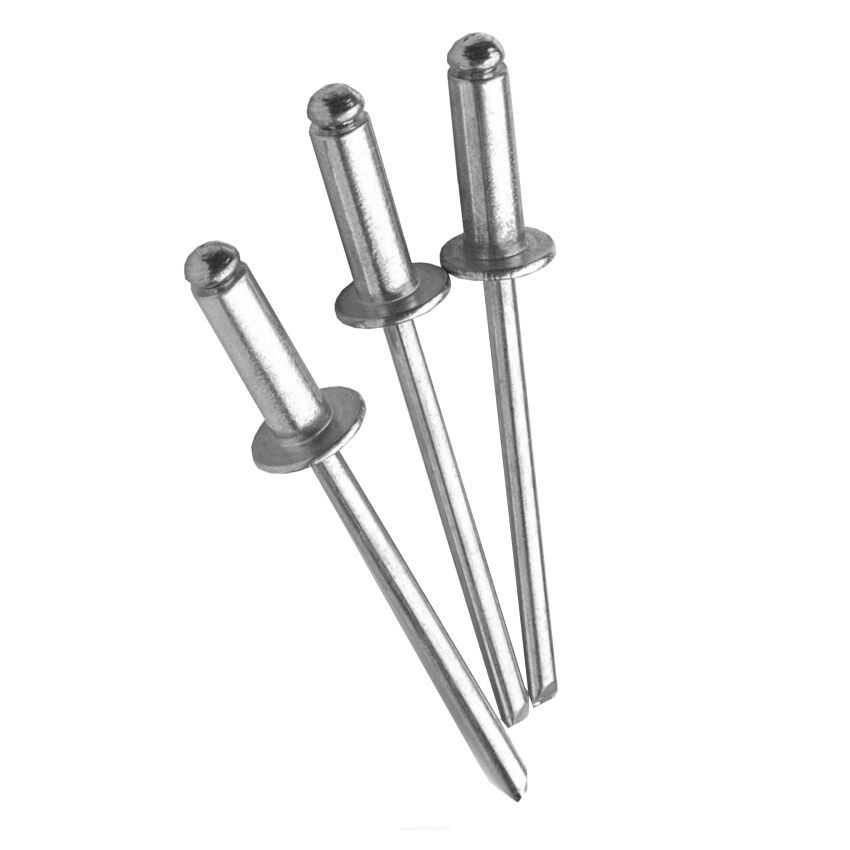
Breakaway rivet 4mm x 8mm
Produkty > Akcesoria do kotłów > Metal articles, screws, nuts, rivets
Producer: POZOSTALI PRODUCENCI
Producer code: 2001230033743

Weight: 1kg
Price gros: €5.32
Price net: €4.33
PRODUCT DESCRIPTION
A rivet is a metal structural element used in riveting, that is, joining flat elements together, e.g., pieces of sheet metal, leather, plastics. Rivets usually work in shear.
A classic rivet is a short rod, ended on one side with a protrusion called a head, and on the other side with a part closed during riveting (opposite to the head) – the bucktail. Riveting was formerly – before welding was mastered – commonly used in the construction of bridges, ships. The riveting process involved hammering a hot rivet so that it filled a previously prepared hole in two pieces of cladding.
Currently, classic riveting is rarely used, having been replaced by welding. However, due to ease of execution and low cost, riveting with tubular blind rivets has become widespread. Such a rivet is a tube with a mushroom-shaped head, through which a rod with a neck and an enlargement slightly larger in diameter than the inner diameter of the rivet tube is inserted. The riveting process involves pulling this rod with great force – the enlargement does not pass through the tube but causes it to flare, then the rod breaks at the neck – the rivet is held on one side by its head, on the other by the flare. An additional advantage is the possibility of riveting even with access from only one side. This technology is most often used to fasten sheets to a supporting structure and to each other. There are various types of blind rivets, e.g., made of acid-resistant steel, ensuring a sealed connection, etc. Rivet nuts are fastened on a similar principle.
Classic tubular rivets are also in use – these are short pieces of tubing whose ends (or one end – the other may be pre-prepared) are folded and clinched during riveting using a special device with a cone. Such rivets in various forms are often used to join less critical parts of mechanisms or, for example, to decorate or protect the edges of holes in textile or leather products.
Dimensions:
- Diameter: 4 mm
- Length: 8 mm
PRODUCT DESCRIPTION
A rivet is a metal structural element used in riveting, that is, joining flat elements together, e.g., pieces of sheet metal, leather, plastics. Rivets usually work in shear.
A classic rivet is a short rod, ended on one side with a protrusion called a head, and on the other side with a part closed during riveting (opposite the head) – the bucktail. Riveting was formerly – before welding was mastered – commonly used in the construction of bridges and ships. The riveting process involved hammering a hot rivet so that it filled a previously prepared hole in two pieces of cladding.
Nowadays, classic riveting is rarely used, having been replaced by welding. However, due to ease of execution and low cost, riveting with tubular blind rivets has become widespread. Such a rivet is a tube with a mushroom-shaped head, through which a rod with a neck and a thickening slightly larger in diameter than the inner diameter of the rivet tube is inserted. The riveting process involves pulling this rod with great force – the thickening does not pass through the tube but causes it to flare, then the rod breaks at the neck – the rivet is held on one side by its head, on the other by the flare. An additional advantage is the possibility of riveting even with access from only one side. This technology is most often used to fasten sheets to a supporting structure and to each other. There are various types of blind rivets, e.g., made of acid-resistant steel, ensuring a sealed connection, etc. Rivet nuts are fastened on a similar principle.
Classic tubular rivets are also in use – these are short pieces of tubing whose ends (or one end – the other may be pre-prepared) are bent and clinched during riveting using a special device with a cone. Such rivets in various forms are often used to join less critical mechanical parts or, for example, to decorate or protect the edges of holes in textile or leather products.
Dimensions:
- Diameter: 4 mm
- Length: 8 mm
Product options
 Polish
 Czech
Czech
 German
 Slovak
 Ukrainian