 Zapraszamy do sklepu http://www.example.com |
Pełna nazwa firmy ullica nr kod Miasto tel. +48 00 0000-000 |
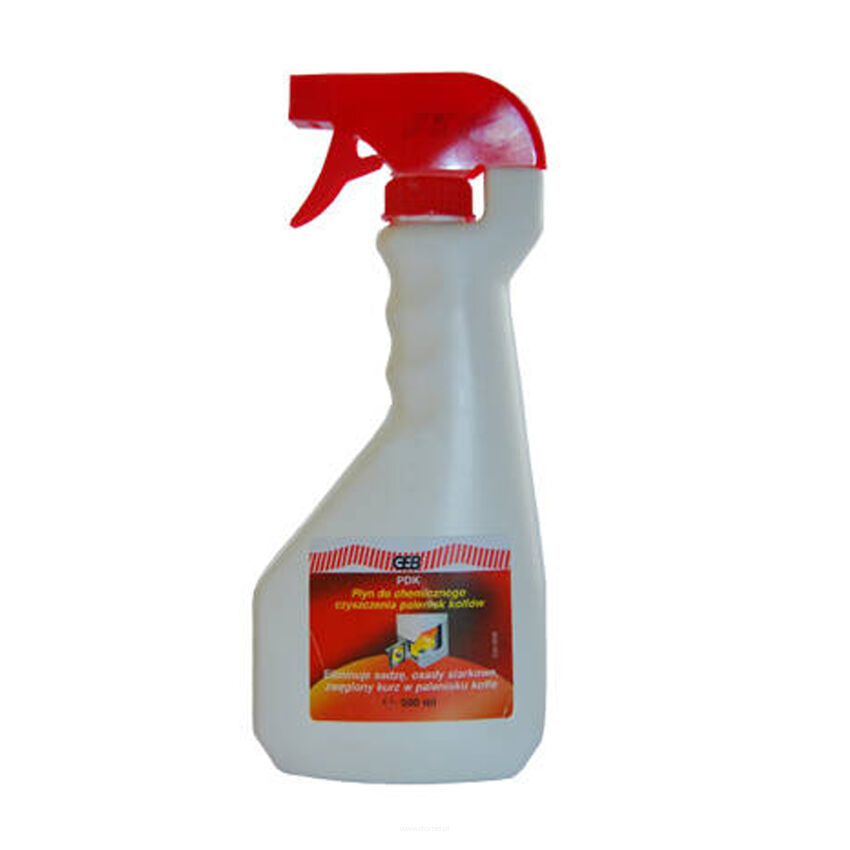
Chemical liquid for boiler cleaning GEB 500 ml
Produkty > Akcesoria do kotłów > Cleaning of the boiler, ramrod, brush, Sadpal, Spalsadz
Producer: GEB
Producer code: 3283988720147

Weight: 0.60kg
Price gros: €7.22
Price net: €5.87
Liquid for chemical cleaning of boiler fireboxes.
Eliminates soot, sulfur deposits, charred dust in the boiler firebox.
PRODUCT ADVANTAGES
- ready to use, no prior preparation required
- increases device efficiency
- protects metals against corrosion
- inhibits formation of new deposits
USAGE INSTRUCTIONS
Turn on the burner until the temperature reaches between 40 and 50 degrees C. Then turn it off. Spray the surface of the firebox walls with a large amount of the liquid. Relight the burner until the temperature reaches between 80 and 90 degrees C. After cooling, vacuum the residues.
No need to disassemble or pre-clean with a brush.
Capacity: 500 ml.
After the heating season ends or in other cases of planned boiler shutdown, the loaded portion of fuel should be burned out. After extinguishing the boiler and cooling it down, all residues of burned fuel should be removed from the firebox, and the entire boiler should be cleaned and maintained. Maintenance should include lubricating (with oil) the internal partitions of the firebox chamber and all moving parts. During the boiler's downtime, special attention should be given to protecting the fuel feeding mechanism to the firebox by lubricating the horizontal guides.
Eliminates soot, sulfur deposits, charred dust in the boiler firebox.
PRODUCT ADVANTAGES
- ready to use, no prior preparation required
- increases device efficiency
- protects metals against corrosion
- inhibits the formation of new deposits
HOW TO USE
Turn on the burner until the temperature reaches between 40 and 50 degrees C. Then turn it off. Spray the surface of the firebox walls with a large amount of the liquid. Relight the burner until the temperature reaches between 80 and 90 degrees C. After cooling, vacuum the residues.
No need to disassemble or pre-clean with a brush.
Capacity: 500 ml.
The container has a diffuser.
Product options
 Polish
 Czech
Czech
 German
 Slovak
 Ukrainian