 Zapraszamy do sklepu http://www.example.com |
Pełna nazwa firmy ullica nr kod Miasto tel. +48 00 0000-000 |
Catalyst for soot combustion SPALSADZ in a 25 kg bucket
Produkty > Akcesoria do kotłów > Cleaning of the boiler, ramrod, brush, Sadpal, Spalsadz
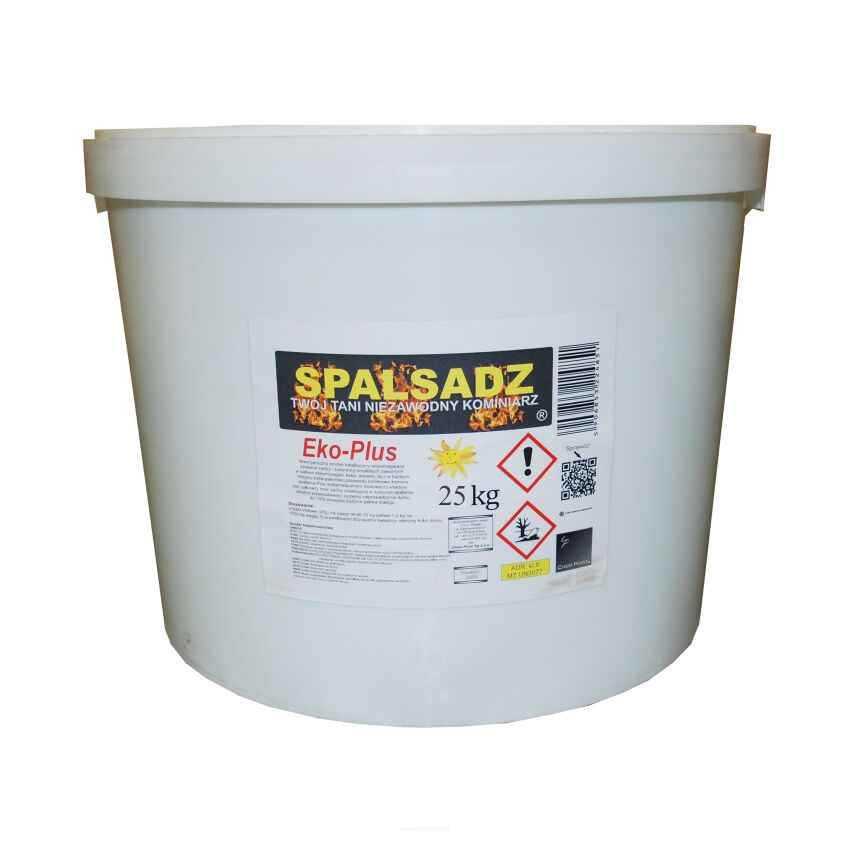
Code: 7317
Producer: CHEM POINT
Producer code: 2001230073176

Weight: 25.90kg
Price gros: €41.60
Price net: €33.82
Producer: CHEM POINT
Producer code: 2001230073176
Weight: 25.90kg
Price gros: €41.60
Price net: €33.82
Product description:
Spalsadz improves the durability and efficiency of boilers, fireplaces, and central heating stoves.
It eliminates soot and coke by burning them off. Unburned hydrocarbons, including benzopyrene, are burned along with the soot. Carbon monoxide oxidizes to carbon dioxide.
Using the Spalsadz preparation causes:
- cleaning action on boiler surfaces
- improvement of combustion processes - reduction of solid particle lift and carbon dioxide concentration in flue gases
- reduction of SO2 emissions
- limitation of high and low temperature corrosion
- reduction of dustiness.
Systematic use of Spalsadz in the ratio of 1-2 kg per 1 ton of coal causes the elimination of deposits - slag in the furnace and heating installation, maintaining their efficiency during the heating season.
- cleaning action on boiler surfaces
- improvement of combustion processes - reduction of solid particle lift and carbon dioxide concentration in flue gases
- reduction of SO2 emissions
- limitation of high and low temperature corrosion
- reduction of dustiness.
Systematic use of Spalsadz in the ratio of 1-2 kg per 1 ton of coal causes the elimination of deposits - slag in the furnace and heating installation, maintaining their efficiency during the heating season.
Thanks to this, downtime for cleaning the furnace is short and only involves cleaning ash from the rear part of the furnace. After using SPALSADZ - as a result of burning off the binder which is soot - the crust (deposits) changes its structure, loosens, and falls off. The new coating is burned off continuously - the furnace walls remain clean. Spalsadz does not cause glazing (screens) of heating elements - it does not contain dolomite in its composition.
Due to the above advantages, it is widely used in the operation of boilers fired with coal, dust coal, coke, wood, peat, brown coal, both in small, medium, and large boiler rooms. It fundamentally improves boiler efficiency by keeping the boiler walls clean. Every millimeter of deposit (slag, crust) on the furnace wall increases solid fuel consumption by 10%. Using the Spalsadz preparation allows saving up to 20% on fuel costs!!
WHY CLEAN THE BOILER
To economize fuel consumption and achieve the declared power and thermal efficiency of the boiler, it is necessary to keep the combustion chamber and convection channels properly clean. While using our central heating installation properly, we cannot prevent contamination inside the boiler, which is the heat source. Burning solid fuels causes soot and ash to deposit on the walls of flue gas ducts. This, in turn, causes a reduction in the boiler's thermal power and an increase in fuel consumption. This is caused by reduced chimney draft and accelerated fuel combustion. Therefore, to prevent deterioration of the thermal properties of our boiler, we should not forget to clean it frequently.
In the boiler's combustion chamber, special attention should be paid to periodic cleaning of micro-gaps in the automatic grate plate.
Cleaning of convection channels, where volatile ashes settle, should be done systematically every 3 to 7 days, especially when using the boiler in "traditional grate" mode. An important issue is the frequency of cleaning the central heating boiler. If the fuel burned is coal or appropriate quality wood, cleaning once every few weeks should suffice. However, if we burn coke, cleaning should be done significantly more often - once every 7 to 10 days. Once every few years, the boiler should be cleaned of so-called scale. For this, special solutions dissolving deposits are used (e.g., aqueous hydrochloric acid solution).
Tools equipped with the boiler are used for cleaning. Cleaning the boiler's convection channels is enabled by front cleaning doors and firing-loading doors. Additionally, periodic cleaning of the air chamber located at the rear of the boiler, where dust falling from the automatic grate plate accumulates, should be performed. This cleaning is done through the side cleaning door.
For cleaning solid fuel boilers, wire brushes or pokers are used. Large boilers can be cleaned with compressed air. Cleaning is carried out through the boiler's cleaning openings, remembering to keep the flue damper open. Boilers may have numerous such openings located in various places (top, side, or rear). Remaining ash is cleaned through the lower cleaning door of the boiler with the help of a scraper. After finishing work, we must remember to hermetically close all cleaning openings.
Also important for proper boiler operation is cleaning the chimney flue.
After the heating season or in other cases of planned boiler shutdown, the loaded portion of fuel should be burned out. After extinguishing the boiler and cooling it down, all residues of burned fuel should be removed from the grate and the entire boiler cleaned and maintained. Maintenance should include lubricating the internal partitions of the combustion chamber and all moving parts with oil. During the boiler downtime, special care should be taken to protect the fuel feeding mechanism to the combustion chamber by lubricating the horizontal guides.
Product description:
Spalsadz improves the durability and efficiency of boilers, fireplaces, CO stoves.
It eliminates soot and coke by burning them off. Unburned hydrocarbons including benzo[a]pyrene are burned along with the soot. Carbon monoxide oxidizes to carbon dioxide.
Using the Spalsadz preparation causes:
- cleaning action on boiler surfaces
- improvement of combustion processes - reduction of solid particle lift and carbon dioxide concentration in flue gases
- reduction of SO2 emissions
- limitation of high and low temperature corrosion
- reduction of dustiness.
Systematic use of Spalsadz in the ratio of 1-2 kg per 1 ton of coal causes the elimination of deposits - slag in the furnace and heating installation, maintaining their efficiency during the heating period.
- cleaning action on boiler surfaces
- improvement of combustion processes - reduction of solid particle lift and carbon dioxide concentration in flue gases
- reduction of SO2 emissions
- limitation of high and low temperature corrosion
- reduction of dustiness.
Systematic use of Spalsadz in the ratio of 1-2 kg per 1 ton of coal causes the elimination of deposits - slag in the furnace and heating installation, maintaining their efficiency during the heating period.
Thanks to this, downtime for furnace cleaning is short and only involves cleaning ash from the rear part of the furnace. After using SPALSADZ - as a result of burning off the binder which is soot - the crust (deposits) changes its structure, loosens and falls off. The new coating is burned off continuously - the furnace walls remain clean. Spalsadz does not cause glazing (screens) of heating elements - it does not contain dolomite in its composition.
Due to the above advantages, it is widely used in the operation of boilers fired with coal, dust, coke, wood, peat, brown coal, both in small, medium and large boiler rooms. It fundamentally improves boiler efficiency by keeping the boiler walls clean. Every millimeter of deposit (slag, scale) on the furnace wall increases solid fuel consumption by 10%. Using the Spalsadz preparation allows saving up to 20% on fuel costs!!
WHY CLEAN THE BOILER
In order to economize fuel consumption and achieve the declared power and thermal efficiency of the boiler, it is necessary to keep the combustion chamber and convection channels properly clean. While the operation of our central heating installation proceeds properly, we cannot prevent contamination inside the boiler which is the heat source. Burning solid fuels causes soot and ash to deposit on the walls of flue gas ducts. This in turn causes a reduction in the boiler's thermal power and an increase in fuel consumption. This is caused by reduced chimney draft and accelerated fuel combustion. Therefore, to prevent deterioration of the thermal properties of our boiler, we should not forget to clean it frequently.
In the boiler's combustion chamber, special attention should be paid to periodic cleaning of microcracks in the automatic grate plate.
Cleaning of convection channels, where volatile ashes settle, should be done systematically every 3 to 7 days, especially when using the boiler in "traditional grate" mode. An important issue is the frequency of cleaning the central heating boiler. If the fuel burned is coal or appropriate quality wood, cleaning once every few weeks should suffice. However, if we burn coke, cleaning should be done significantly more often - once every 7 to 10 days. Once every few years, the boiler should be cleaned of so-called scale. For this, special solutions dissolving deposits are used (e.g., aqueous hydrochloric acid solution).
Tools equipped with the boiler are used for cleaning. Cleaning of the boiler's convection channels is enabled by front cleaning doors and firing-loading doors. Additionally, periodic cleaning of the air chamber located at the rear of the boiler, where dust falling from the automatic grate plate accumulates, should be performed. This cleaning is done through the side cleaning door.
For cleaning solid fuel boilers, wire brushes or pokers are used. Large boilers can be cleaned with compressed air. Cleaning is performed through the boiler's cleaning openings, remembering to keep the flue damper in the chimney pipe open. Boilers may have numerous such openings located variously (at the top, side or rear). Remaining ash is cleaned through the cleaning door at the bottom of the boiler with the help of a scraper. After finishing work, we must remember to hermetically close all cleaning openings.
Cleaning the chimney flue is also important for proper boiler operation.
After the heating season or in other cases of planned boiler shutdown, the loaded portion of fuel should be burned out. After extinguishing the boiler and cooling it down, all residues of burned fuel should be removed from the grate and the entire boiler cleaned and maintained. Maintenance should include lubricating the internal partitions of the combustion chamber and all moving parts with oil. During the boiler downtime, special care should be taken to protect the fuel feeding mechanism to the combustion chamber by lubricating the horizontal guides.
COMPOSITION:
Copper (II) sulfate pentahydrate (CuSO4•5H2O) - Ammonium chloride (NH4Cl)
Product options
 Polish
 Czech
Czech
 German
 Slovak
 Ukrainian