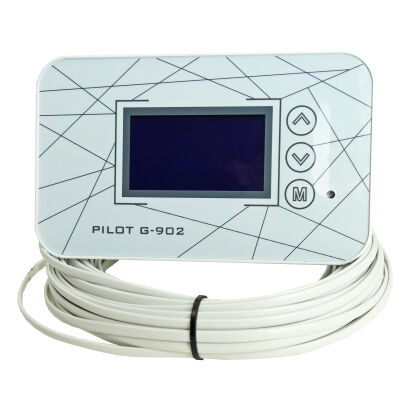
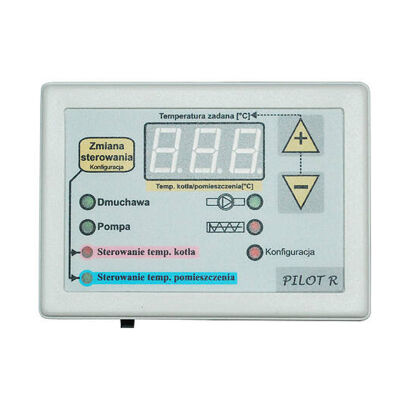

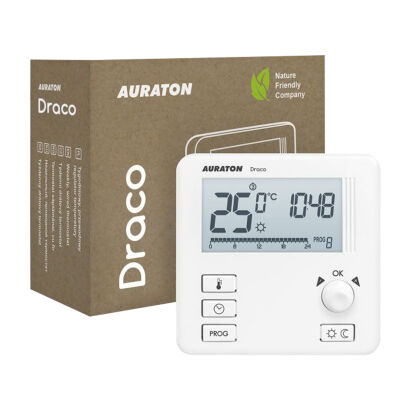
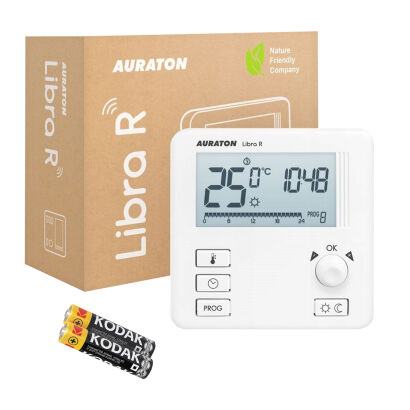
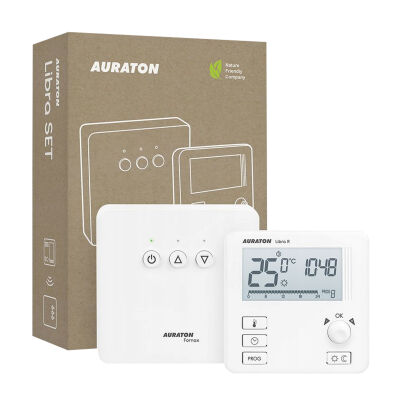
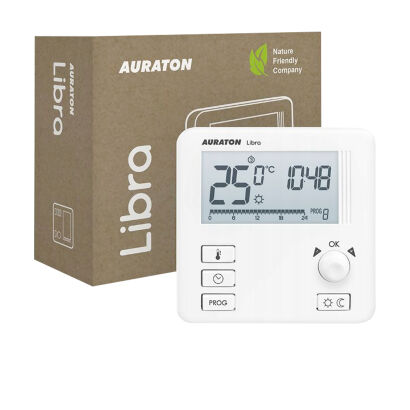
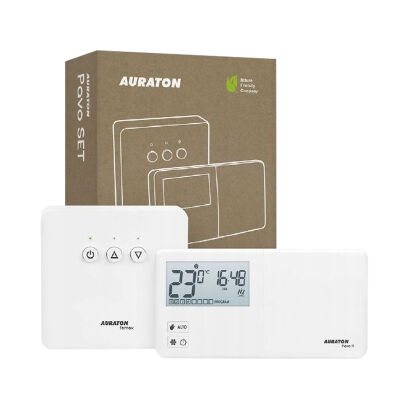
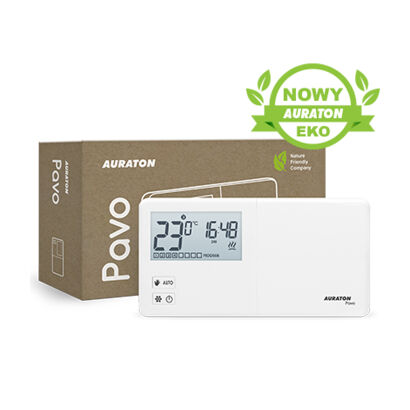

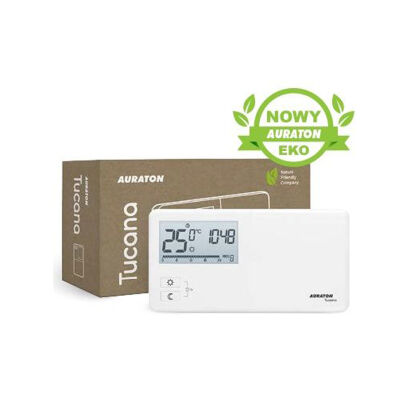
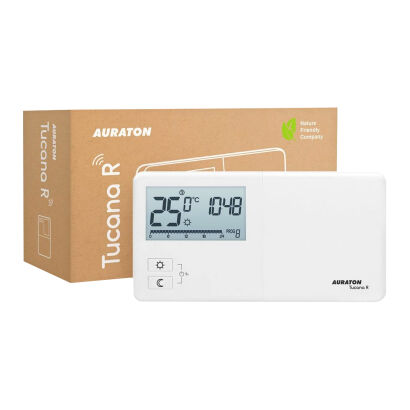
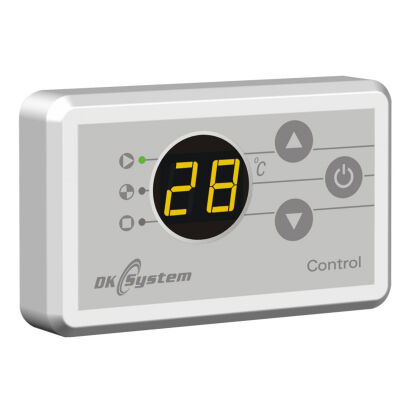
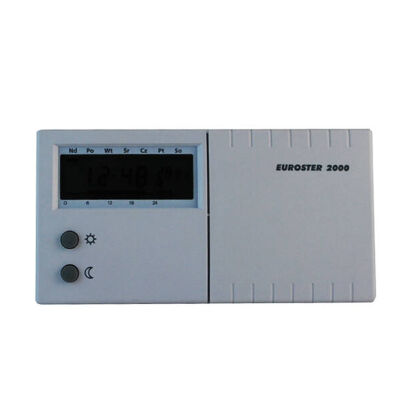
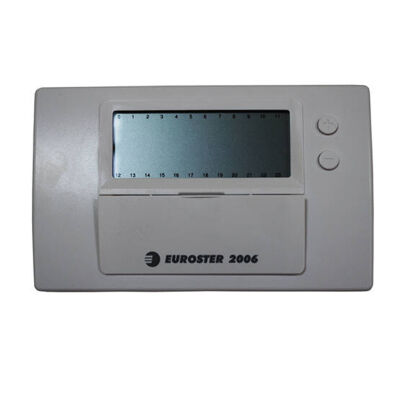
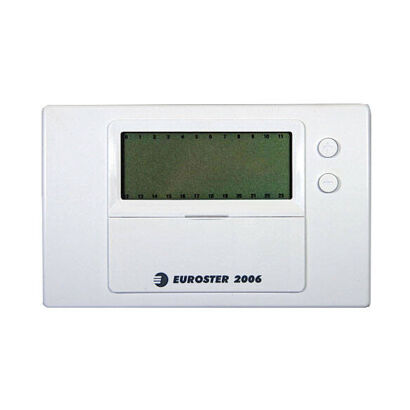
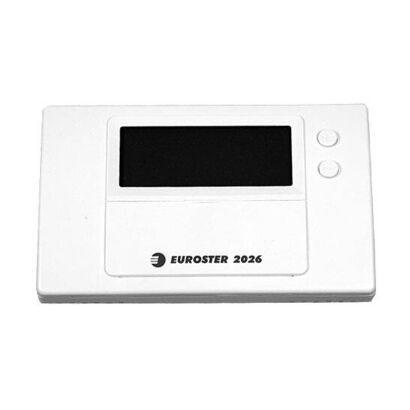
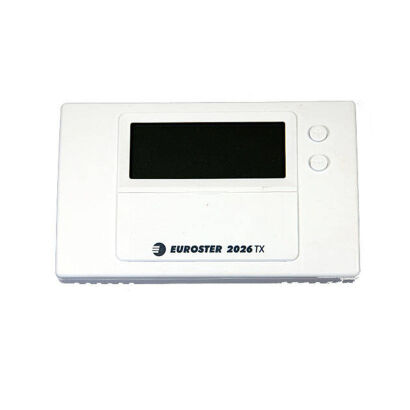
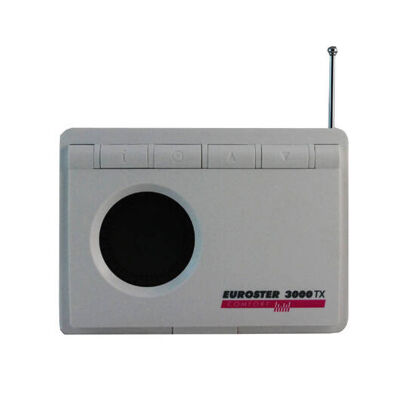
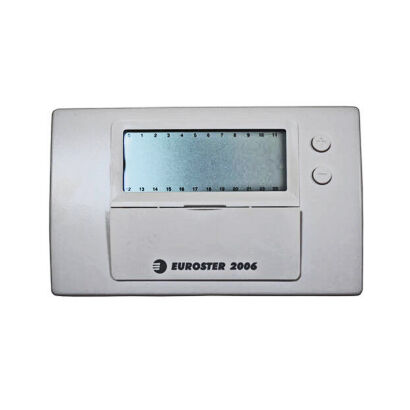
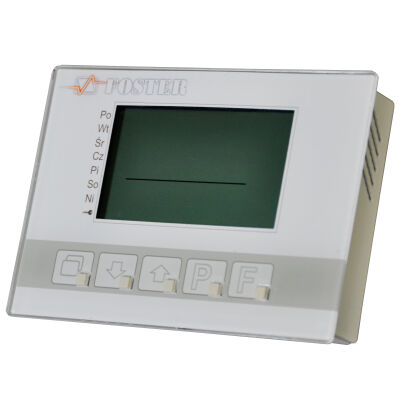
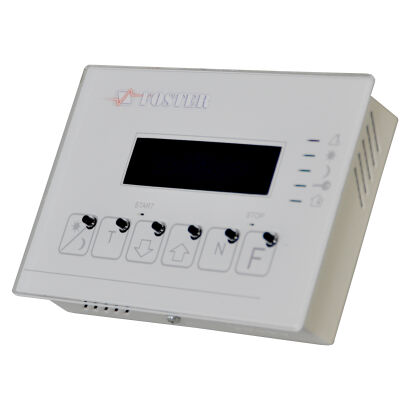
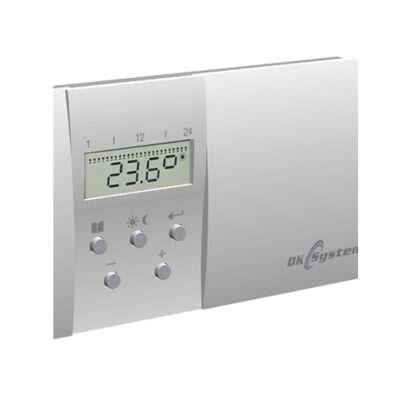

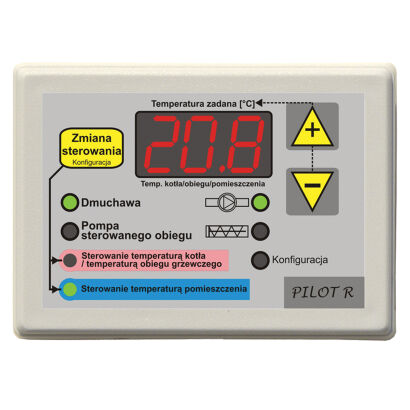
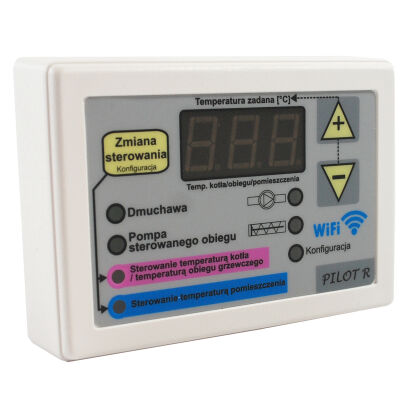
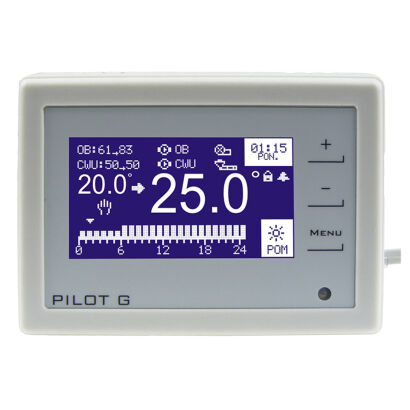

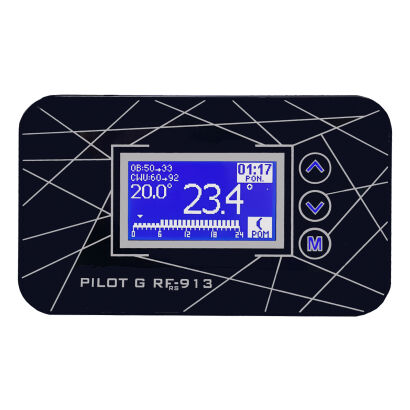
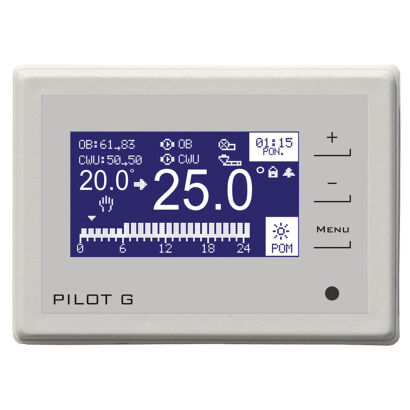
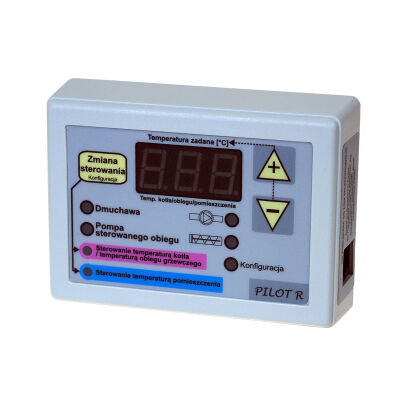
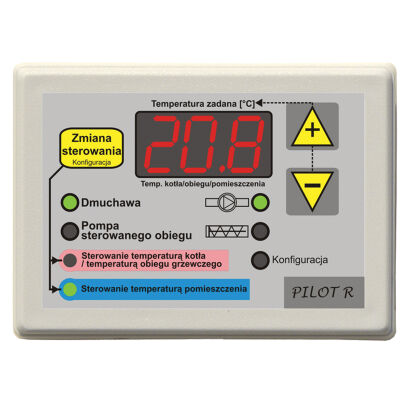
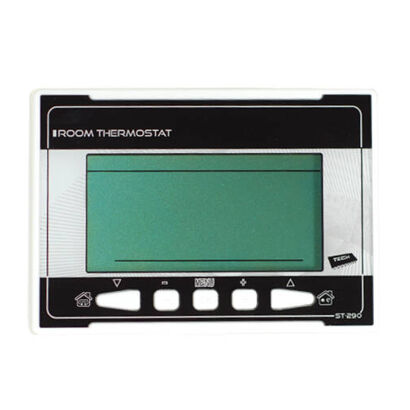
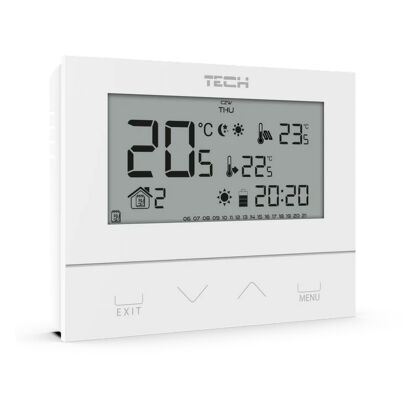
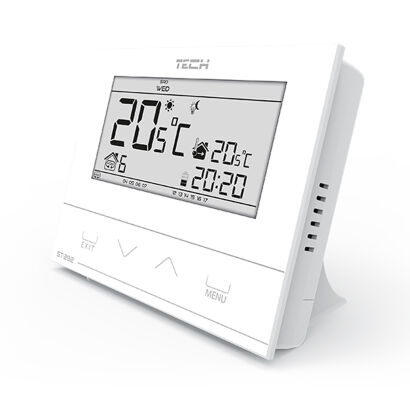
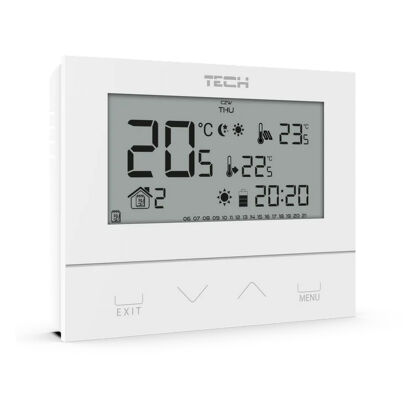
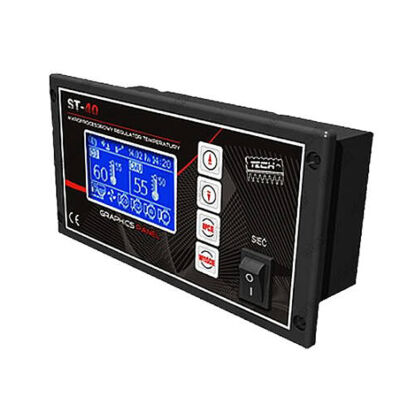
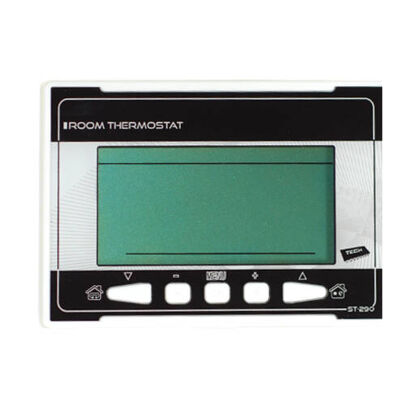
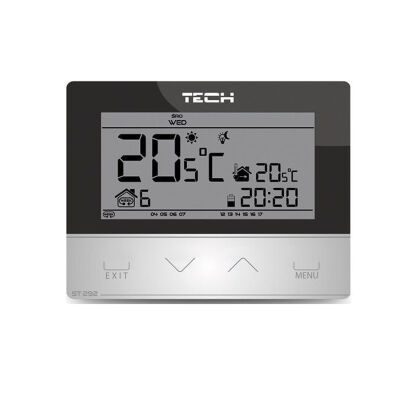
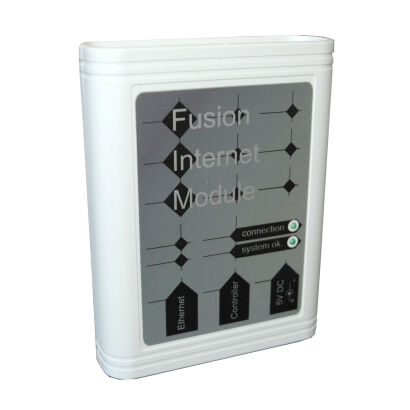
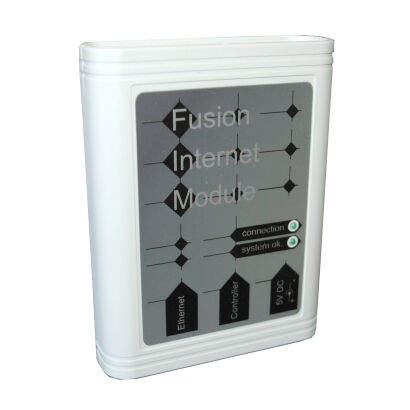
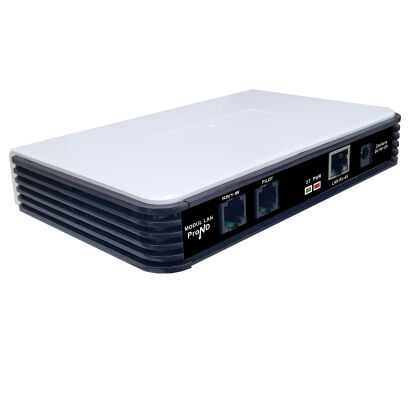
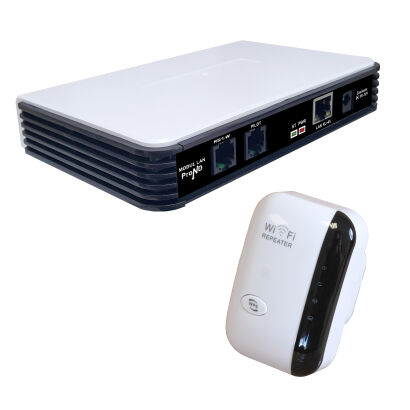
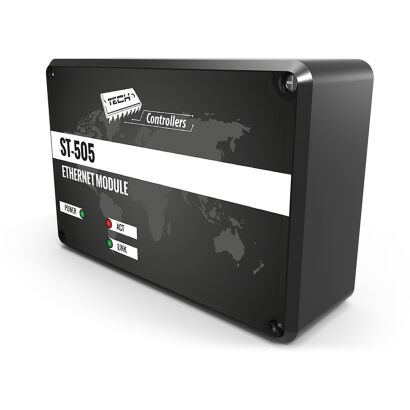
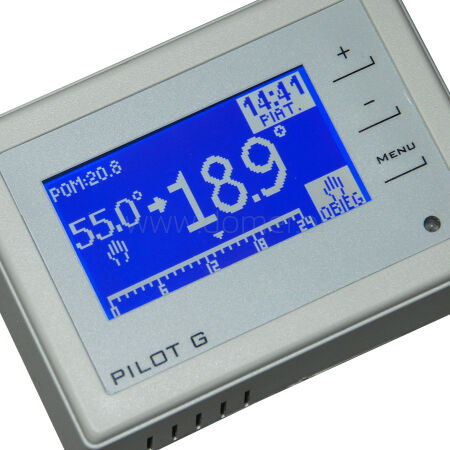
Room panels and thermostats allow controlling heating from the room level, not just at the boiler. In practice, this means a more stable temperature, more efficient operation of the heat source, and easier management of heating zones.
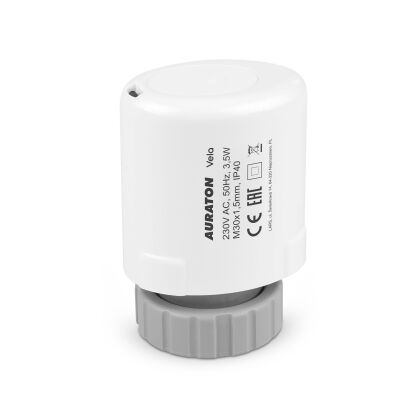
This category includes room temperature controllers, room thermostats, control panels, time programmers, and cooperating elements such as control strips and thermoelectric actuators. Such an offer layout facilitates the selection of components both for modernizing an existing central heating (CO) installation and for a new heating system.
What role do room panels and thermostats play?
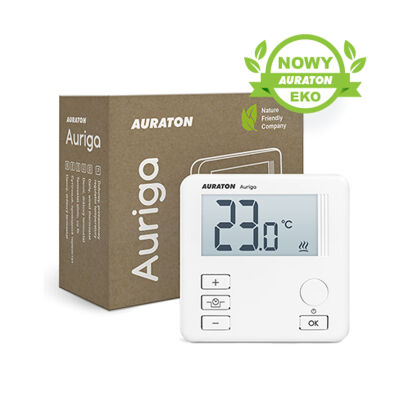
A room controller measures the temperature in the room using a built-in sensor and sends a signal to the heating device or control strip. When the actual temperature deviates from the setpoint, the room controller turns the heating on or off according to the installation's operating logic.
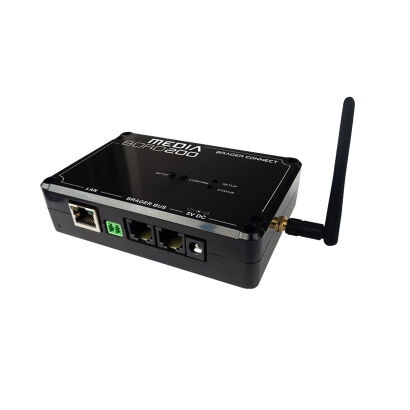
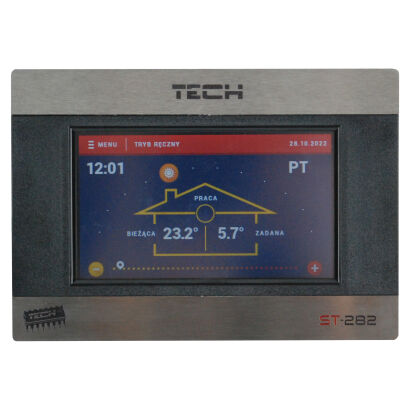
The term room thermostat is sometimes used interchangeably, but in practice it more often means a simpler two-state controller, i.e., operating on an on/off basis. A room panel is usually an additional module connected to the boiler controller; besides measuring temperature, it allows remote monitoring of the boiler's operation and lets you change selected settings without going down to the boiler room.
Why do room temperature controllers improve the operation of the central heating system?
Room temperature controllers improve the operation of the central heating system because they limit overheating of rooms and reduce unnecessary operation of pumps and the heat source. This is especially noticeable in houses with varying heat gains resulting from sunlight, cooking, or the presence of occupants.
With daily and weekly programming, the heating system can maintain different temperatures in the morning, during working hours, and at night. Some models offer manual, holiday, and anti-freeze modes, and for underfloor heating also cooperation with a floor sensor that controls the floor temperature. The typical setting range is usually 5-30 °C or 5-35 °C.
Selection for the boiler and communication method
Selection starts with electrical and communication compatibility. The heating boiler or control strip must support the appropriate contact, thermostat input, or remote panel socket, because this determines whether the chosen wired or wireless controller will control only the circuit or also selected boiler functions.
In practice, the deciding factors are:
- type of cooperation with the boiler controller, control strip, or actuators
- connection method: wired, wireless, RF radio, transmitter-receiver set, or WiFi
- support for underfloor heating with a floor sensor
- range of daily and weekly programming
- interface readability, including touch screen and available language versions
A wired room controller works well where the cable can be routed easily and without interference risk. In some installations, cables up to about 50 m long are used, while a wireless controller facilitates installation after renovation and in places where running a cable would be an unnecessary intervention. With thick ceilings, it is worth assessing the range and possibility of signal amplification.
When is a model for underfloor heating or zone control suitable?
Underfloor heating requires gentler regulation because the floor releases heat with a delay. Therefore, a room temperature controller for underfloor heating should cooperate with a floor sensor or a control strip that manages several loops and thermoelectric actuators, i.e., loop drives.
Zone control makes sense in houses with separate bedrooms, living rooms, and bathrooms, but also in offices or service premises. Each zone receives its own control signal, so thermal comfort does not depend on a single measurement throughout the building.
Settings and signals of proper matching
It is worth starting with one stable daytime temperature and a slight nighttime reduction instead of large jumps. For underfloor heating, better results come from steady operation with corrections, while for radiators faster response and smaller hysteresis, i.e., smaller deviation from the set value, are more effective. In some devices, hysteresis is set, for example, to 0.2 or 0.4 °C.
A well-chosen controller maintains a repeatable temperature without frequent switching and without a noticeable delay in the installation's response to temperature changes in the room. Signals for verification include lack of cooperation with the control strip, too weak radio range, absence of a floor sensor in the floor zone, or too limited programming relative to the building's usage rhythm.
FAQ
How to choose between a wired and wireless controller?
The choice depends on the possibility of running a cable and the signal range. A wired controller works well when wiring is possible (up to about 50 m). Wireless facilitates installation after renovation, but it is worth assessing the signal range beforehand, especially with thick ceilings.
Can a room panel control boiler functions or only the circuit?
It depends on the electrical and communication compatibility of the devices. If the boiler or control strip supports the appropriate input or contact, the panel can control not only the circuit but also selected boiler functions and display information about its operation.
How to set the controller for underfloor heating and radiators?
Underfloor heating requires gentle, stable regulation and cooperation with a floor sensor. Radiators need faster response and smaller hysteresis (e.g., 0.2–0.4°C). Start with a constant daytime temperature and a slight nighttime temperature reduction.
 Polish
 Czech
 German
 Slovak
 Ukrainian