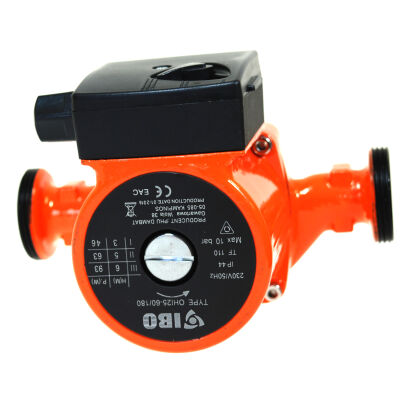
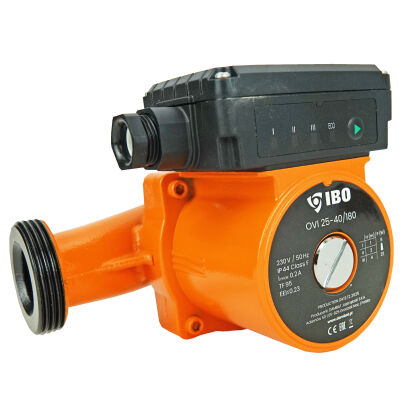
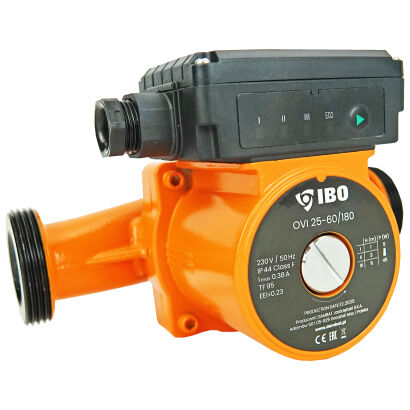
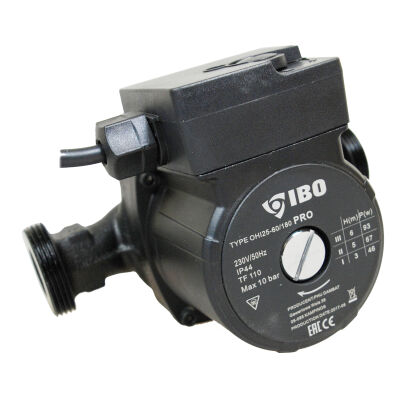
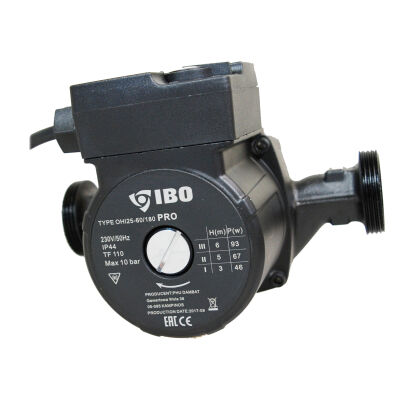

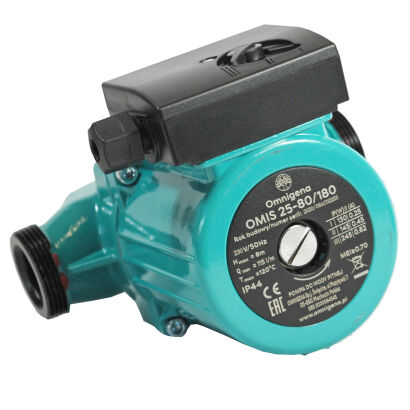
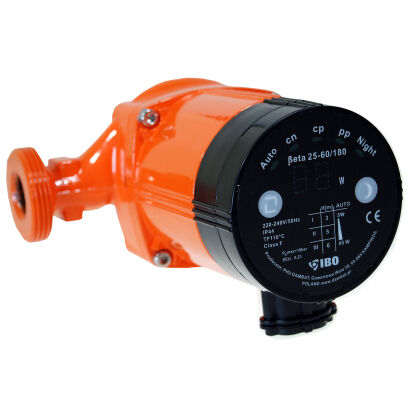
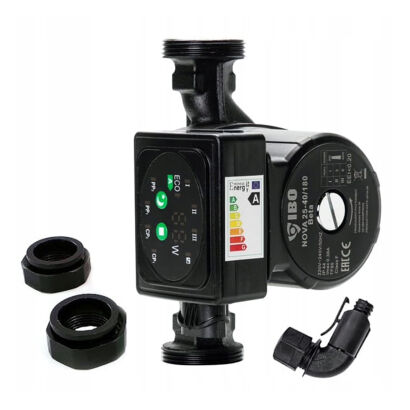
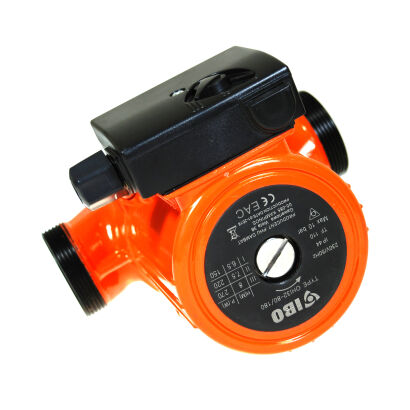
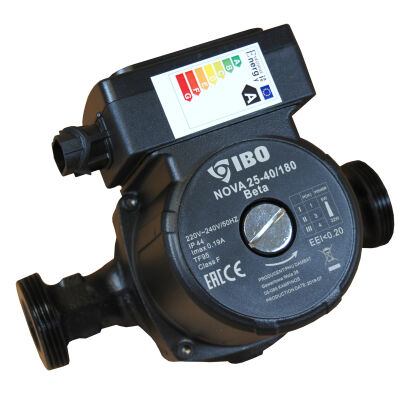
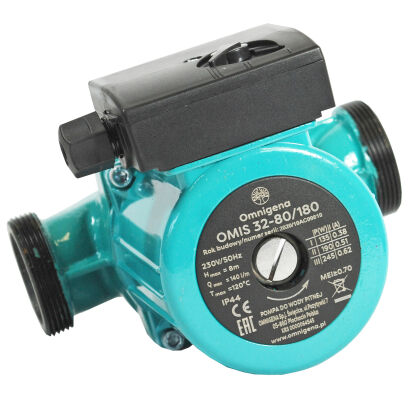
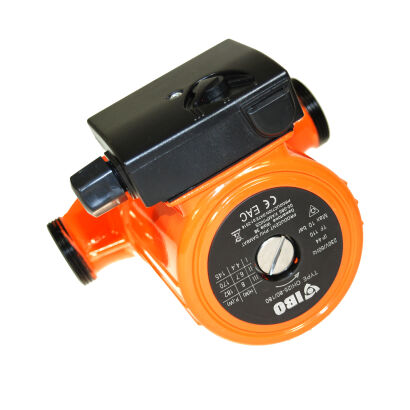

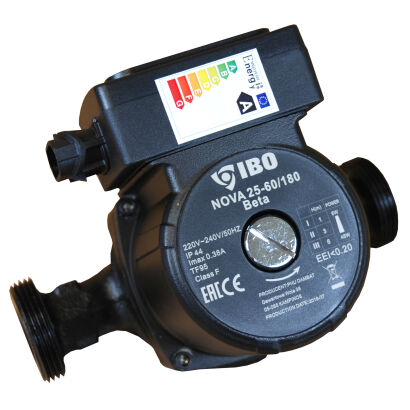
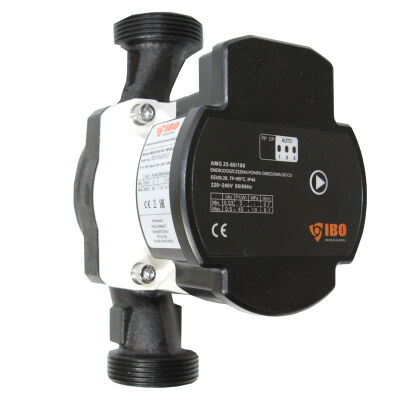
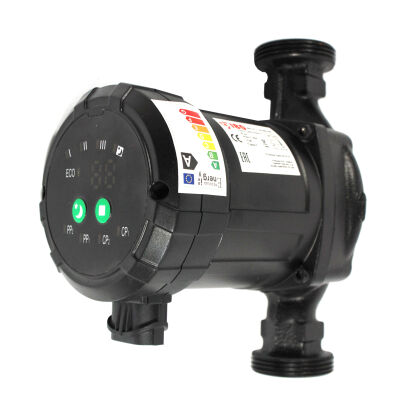
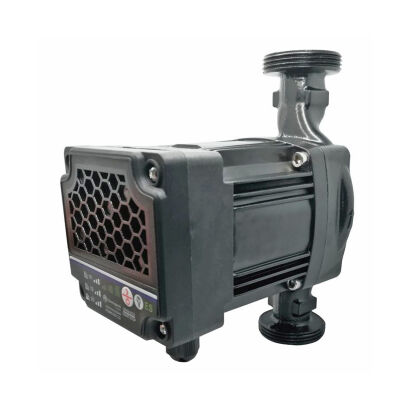
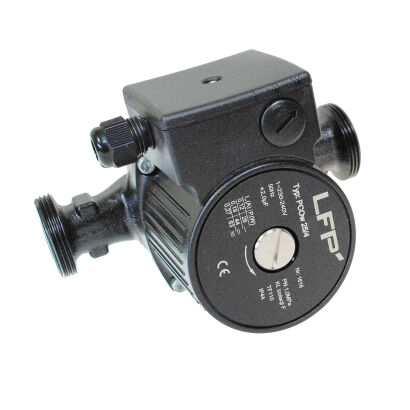
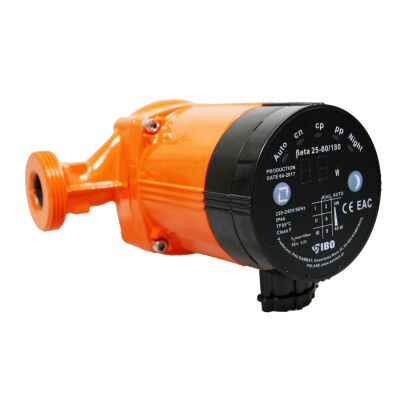
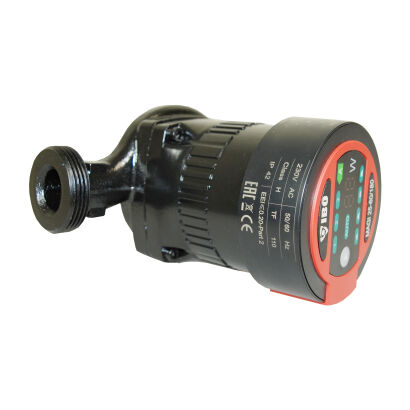
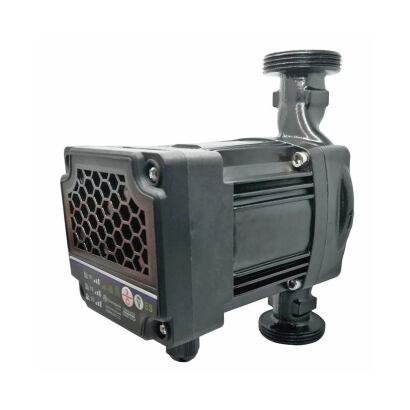


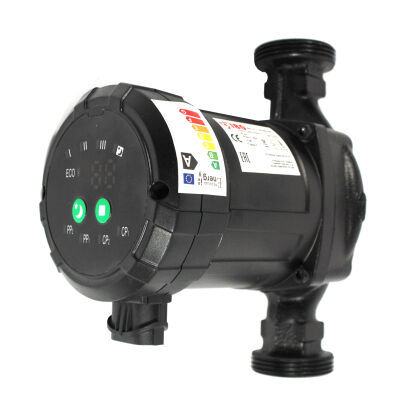
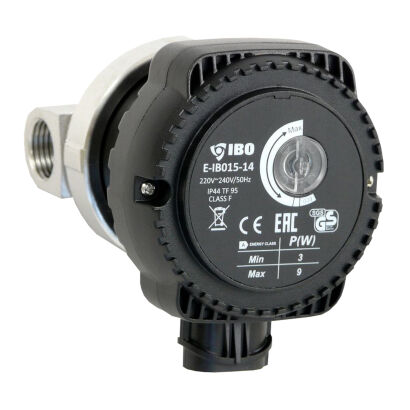
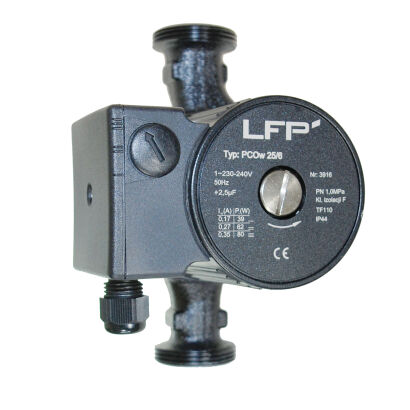
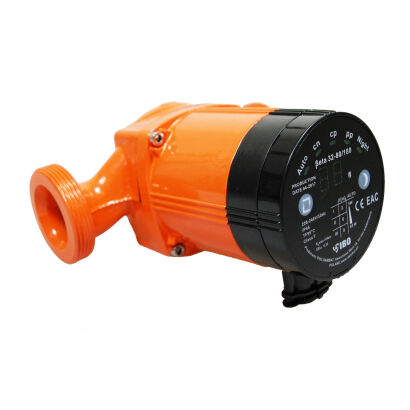
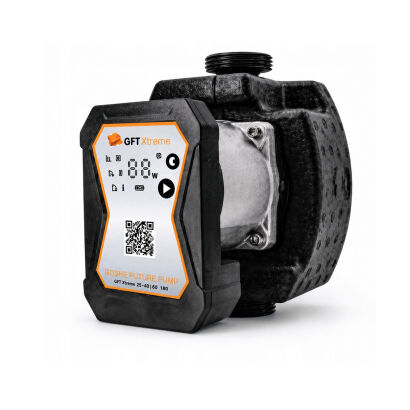
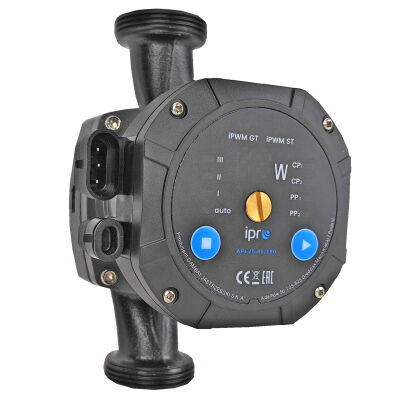
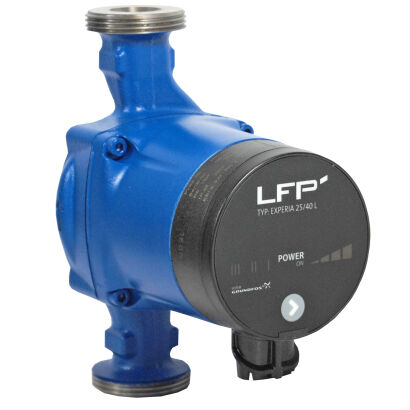
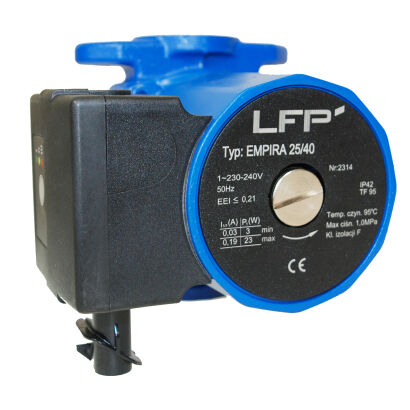
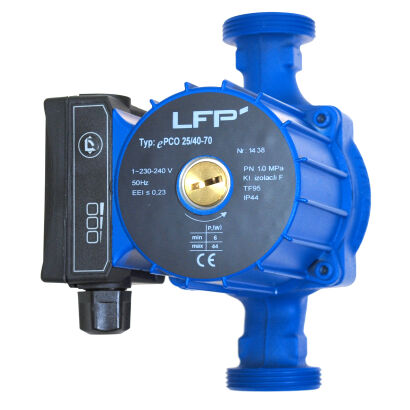
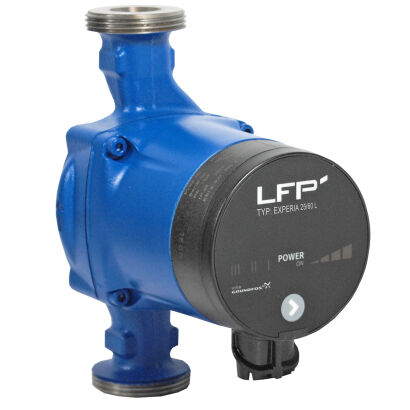
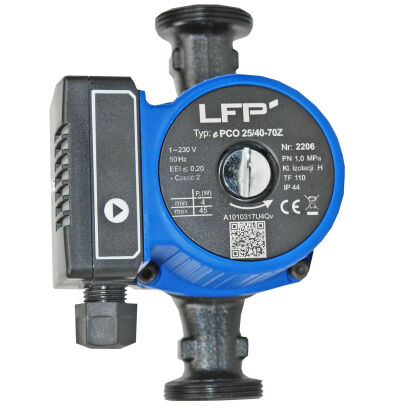
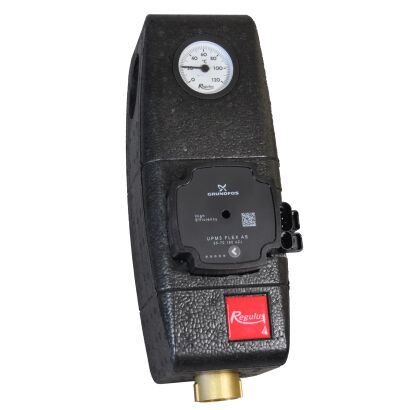
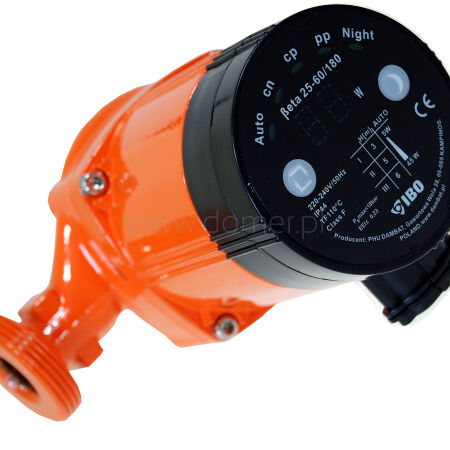
This category includes circulation and recirculation pumps for central heating and domestic hot water (DHW), from standard versions to electronic and energy-saving ones. A well-chosen central heating pump stabilizes the flow, evens out the temperature on radiators and floor heating loops, and reduces power consumption. This group includes models exclusively for DHW as well as universal pumps for central heating and DHW. Selection is based on installation parameters, connections, and installation length, not just boiler power.
How does a central heating pump work in the installation?
The central heating pump forces the movement of water between the heat source and the receivers. Without a constant circulation, the central heating system does not work evenly, and the extreme radiators or longer circuits, such as underfloor heating, receive less heat. The popular term "boiler pump" simplifies the topic because the device serves the entire system and must overcome the resistance of fittings both on the supply and return sides.
Central heating pumps operate with a fixed characteristic or automatically respond to variable flow rate Q. Energy-saving versions use a permanent magnet motor and a frequency converter, so at partial load they consume only a few watts, and power consumption usually ranges from about 5 to 44 W.
Circulation pump vs. recirculation pump
A circulation pump is responsible for the circulation of heating water in the central heating system, also in a closed circuit. A recirculation pump most often works in the domestic hot water (DHW) system and maintains the circulation of hot water between the storage tank and the draw-off points. In commerce, the names are sometimes used interchangeably, so before purchase, it is necessary to check the device's purpose, allowable operating temperature, and the material of parts in contact with water.
Selecting a pump for central heating starts with installation parameters
A well-chosen central heating pump should provide the required flow at the resistance of a specific circuit. Too small a pump will not provide adequate flow in the final sections of the installation, while too large a pump will increase flow noise and energy consumption. The flow rate Q for heating water can be estimated using the formula P/(1.16 × ΔT), where P is power in kW, and the temperature difference ΔT refers to supply and return.
The head height defines the ability to overcome hydraulic resistance, not the building height. A boiler pump in an installation with thermostatic valves usually works better in an electronic version because the flow changes as radiators are throttled.
How to read markings like 25/40/180, 25/60/180 and similar?
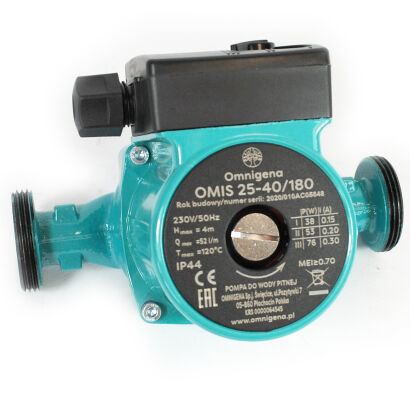
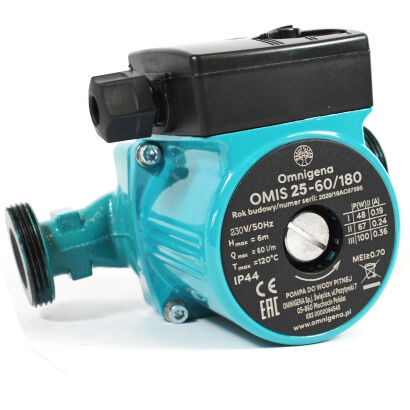
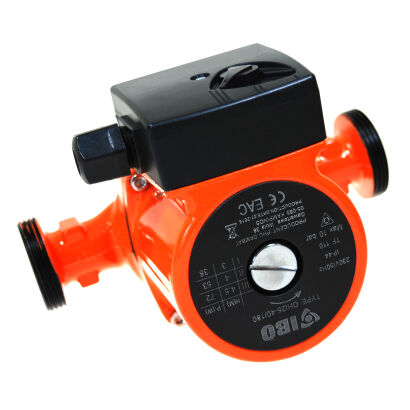
Boiler pumps have markings on their plates that facilitate selection:
- the marking 25 or 32 refers to the connection diameter and compatibility with the installation,
- the marking 40, 60, 80 or 10 refers respectively to the head height of 4, 6, 8 or 10 meters,
- the marking 180 specifies the installation length, important when replacing an old pump without modifying the pipeline.
When modernizing an existing boiler room, the 180 mm spacing and connection type determine whether replacement is possible without additional work.
When is a central heating pump poorly selected or worn out?
Problems with the central heating pump are usually visible from the system's operation, not from the electronics itself. Uneven heating, noisy impeller, or lack of pumping most often result from incorrect selection, air in the system, or contamination in the circuit. An electronic circulation pump will not correct installation errors or closed valves.
In practice, the following are mainly observed:
- underheated extreme radiators or cooled floor heating loops despite correct boiler temperature,
- noise in the system and excessively fast flow after setting too high a speed,
- noisy operation caused by air, magnetite deposits, or bearing wear,
- lack of circulation caused by a blocked impeller, dirty filter, or performance drop.
Installation, accessories, and replacement in an existing installation
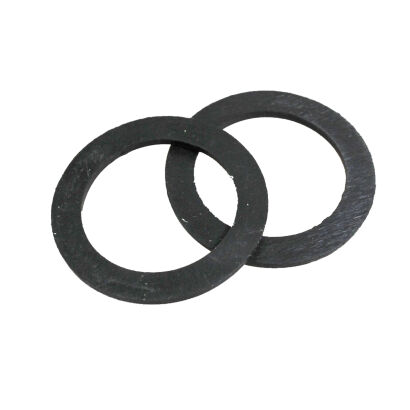
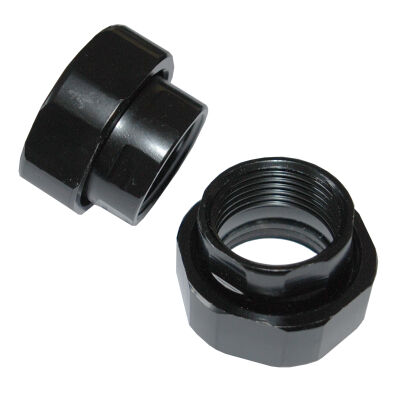
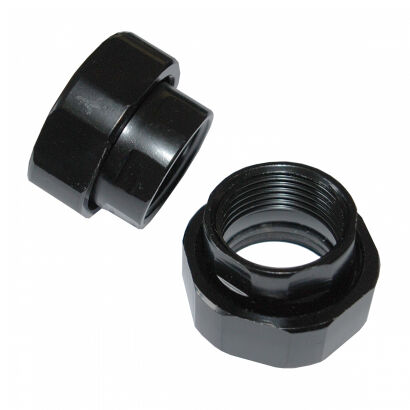
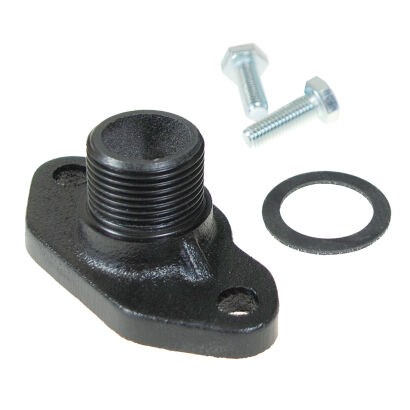
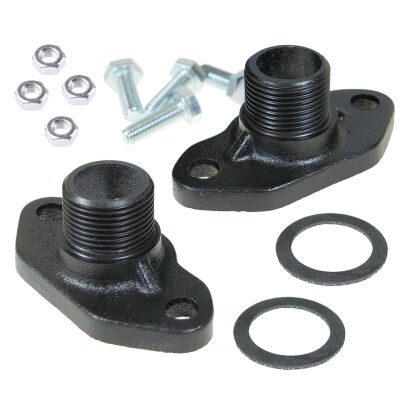
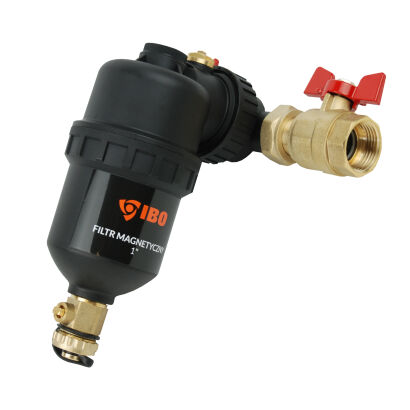
The circulation pump should be installed according to the flow direction, maintaining the proper position of the housing and motor. In an existing installation, 1 inch and 1 1/4 inch union nuts, gaskets, flanges or nozzles with a complete set of screws, and connection tightness are important. With dirty heating water, it is worth considering a magnetic filter or a DN25 dirt separator because deposits shorten the impeller's lifespan.
After replacement, venting and leak testing are performed, and after major intervention, also a pressure test. A manual pump for pressure testing is used for such control. The central heating pump is not a permanent element; its replacement makes sense in case of constant noise, performance drop, leaks, or when switching from an old fixed-speed model to an energy-saving version. In one category, both the pump itself and installation accessories can be selected; shipping from Poland and after-sales service are also available.
FAQ
How to calculate the required flow in the installation?
The formula Q = P/(1.16 × ΔT) is used, where P is power in kW, and ΔT is the temperature difference between supply and return. The result helps select a pump that provides the required flow in the final sections of the installation.
When is it worth choosing a pump intended exclusively for DHW?
When the goal is to maintain continuous circulation of domestic hot water between the storage tank and draw-off points. Before purchase, check the allowable operating temperature, materials of parts, and the device's purpose.
What installation symptoms suggest pump problems?
Uneven heating of extreme radiators, cooled floor heating loops, noisy or intermittent operation, noise at high flow, air in the system, deposits on the impeller, or complete lack of pumping may indicate pump problems.
 Polish
 Czech
 German
 Slovak
 Ukrainian