


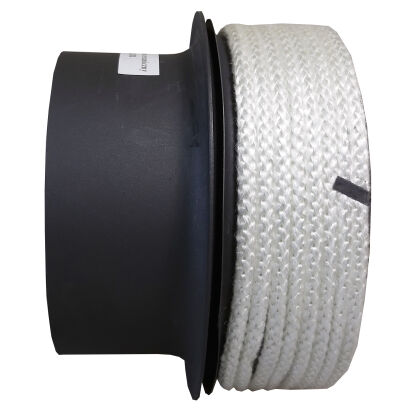


This category allows you to assemble or supplement a flue connection between the boiler or fireplace insert and the existing chimney flue. It is useful when replacing a single pipe, changing the direction of the run, or assembling the entire section from the device to the chimney. Well-chosen chimney pipes help maintain tightness, stable natural draft, and efficient exhaust of flue gases from wood- or coal-fired appliances. A chimney pipe is a single section, a chimney flue means the smoke channel, and a chimney system includes the entire connection setup with elbows, tees, and cleanouts.
Chimney pipes work throughout the connection, not just at the boiler outlet
Chimney systems must match each other in terms of dimensions, direction of routing, and connection method. In practice, a single chimney pipe rarely suffices because a straight section usually needs to be supplemented with an elbow, tee, or cleanout, which is an inspection opening for removing soot. Single-wall steel liners and chimney pipes are used where modernization of an existing chimney is needed without rebuilding the entire flue or replacing a worn section of the flue pipe, which connects the appliance to the chimney.
Choosing the diameter of the flue and the length of sections determines the system's operation
The diameter of the flue should not be chosen by guesswork. The chimney pipe cannot have a smaller passage than the outlet of the appliance's flue pipe, and the chimney cross-section is also a reference point because too small a passage weakens the natural draft, while unjustified oversizing hinders stable operation during ignition. When replacing a section, length also matters to limit the number of joints and maintain the rigidity of the connection.
The most common in this group are:
- diameters of 120, 130, 150, 160, 180, and 200 mm, and in some smoke sections also 110 mm, as well as 250 mm in some connections
- lengths of 250, 500, and 1000 mm, which facilitate assembling a section without unnecessary cutting
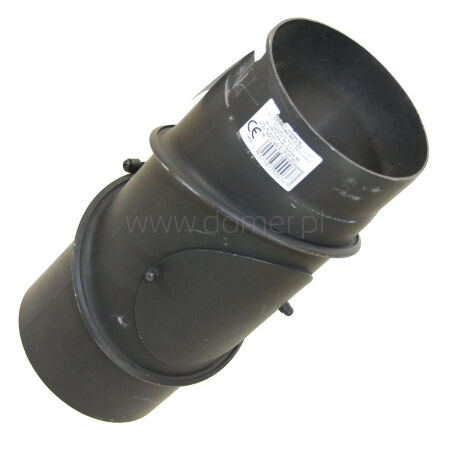
- pipes with a damper, allowing regulation of the flue gas flow cross-section in the flue pipe
- pipes with a cleanout, which facilitate access to soot and speed up flow clearance inspection
Correct system assembly requires elements with compatible connection methods
A compatible connection method is as important as the diameter itself. Profiled ends inserted into each other create a socket joint, rigid and tight, without play at the section joints. In connection sections, the temperature resistance of the coating and the sheet thickness selected for operating conditions also matter.
Completing the connection most often includes:
- straight pipes for building the section between the appliance and the chimney
- adjustable elbows for changing the direction of the smoke flue
- 90-degree tees for connecting a branch and facilitating maintenance
- elements with cleanouts for regular soot removal
- single-wall steel liners when modernizing an existing flue
Working joints are sealed with heat-resistant mortar up to 1200 °C because diameter compatibility alone is not enough to maintain full tightness.
Signs of poor selection or leaks become apparent quickly during operation
A leaky smoke flue or improperly assembled chimney pipes become noticeable already during ignition and operation at full power. Smoke backing into the room, soot deposits at joints, or unstable firebox operation indicate that the problem lies in diameter, flow clearance, or installation. An improperly made chimney system reduces combustion efficiency, accelerates deposit buildup, and complicates safe operation.
Most often, the following are checked:
- soot traces and discoloration near sockets and tees
- increased flue gas flow resistance after adding additional elbows
- excessive contamination of a section without access to a cleanout
- compatibility of the flue pipe, pipe, and chimney diameters
Regular maintenance keeps tightness and flow clearance throughout the season
Chimney pipes require systematic inspection, even when operating without visible signs of problems. Inspection of connections before the heating season, soot cleaning through the cleanout, and assessment of the damper condition reduce the risk of draft drop. It is also worth checking the heat-resistant coating and deformations on sections located closest to the heat source.
A chimney pipe should have the proper flue diameter, tight sockets, appropriate sheet thickness, and suitable temperature resistance. In lighter smoke sections, 0.5 mm sheet metal is used, and in connection elements exposed to greater mechanical loads, also 2 mm. Such selection facilitates assembling a durable chimney system without makeshift transitions and frequent repairs.
 Polish
 Czech
 German
 Slovak
 Ukrainian